
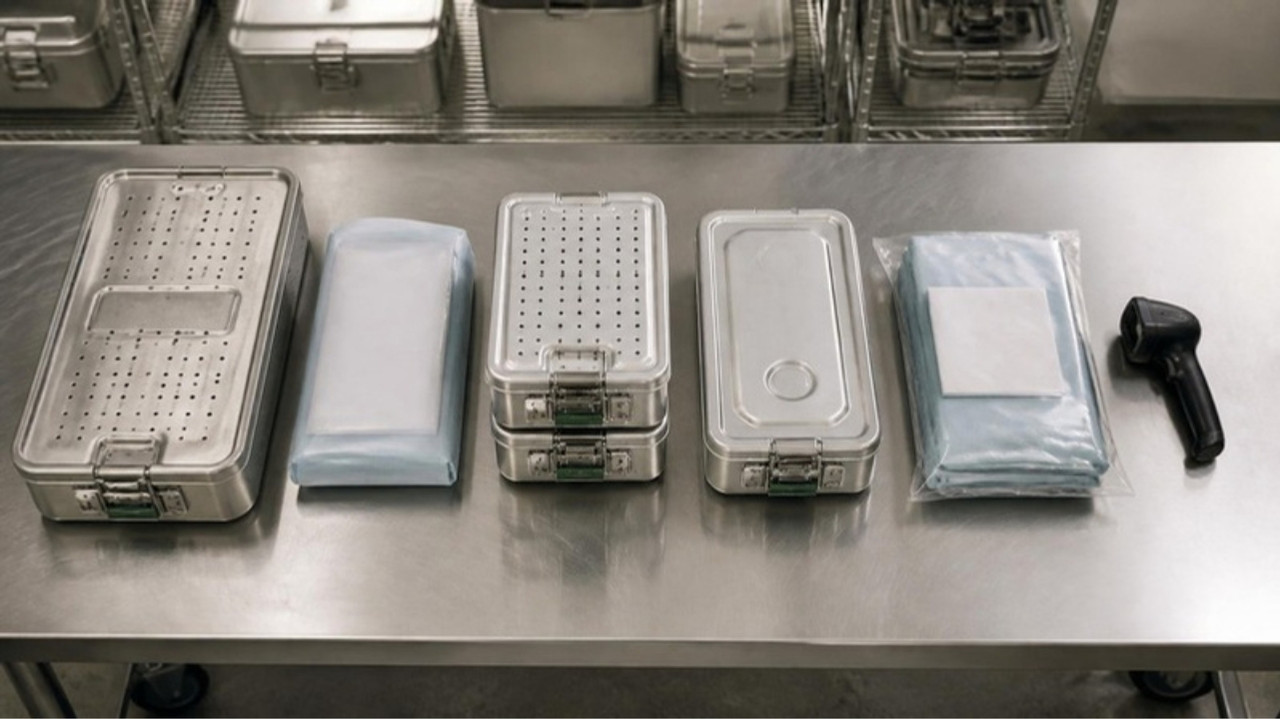
For years, one of the biggest challenges in medical device field operations was visibility.
Where is the tray?
Which representative has the kit?
What inventory is sitting at the hospital?
Was the product used?
Has the loaner been returned?
Digitizing those workflows represented a major improvement over spreadsheets, phone calls and disconnected systems.
But visibility alone is no longer enough. Knowing where inventory is does not necessarily tell an organization what should happen next.
The next evolution of field operations is moving from inventory visibility to inventory control.
Visibility Answers "Where Is It?"
A connected field inventory platform can provide a much clearer view of assets distributed across warehouses, territories, representatives and hospitals. That visibility is essential.
But consider a simple example. A medical device company can see that one territory has 12 surgical kits while another has six. That information alone does not tell operations whether either territory is properly stocked.
To understand that, the organization also needs to understand demand:
- How many procedures are scheduled?
- Which products are required?
- How frequently are the kits being used?
- How quickly are they turning?
- Is another territory carrying inventory that has been idle for weeks?
The more important question becomes: where should the inventory be?
Inventory Control Connects Supply With Demand
True inventory control requires connecting physical inventory with the surgical activity driving it. Instead of treating inventory as a collection of items and locations, the organization can evaluate inventory as part of an operational workflow:
Case demand → allocation → movement → usage → replenishment → return or redeployment
Each step produces information that can influence the next decision. An upcoming case creates demand. Demand determines which inventory should be allocated. Allocation drives movement. Usage determines replenishment. Completed cases release assets for the next procedure.
When these workflows are connected, field operations become significantly more proactive.
The Goal Is Exception-Based Operations
Most field teams do not need more dashboards. They need fewer problems to investigate manually.
A modern operational system should surface the exceptions that require action. For example:
- A tray assigned to tomorrow's procedure has not returned.
- A territory is short on a product required for upcoming cases.
- A kit has not supported a procedure in 45 days.
- Inventory is approaching expiration.
- A nearby territory has available inventory that can satisfy demand.
- Usage has been captured but has not yet generated the expected downstream transaction.
These are not simply visibility questions. They are operational decisions. The more effectively a platform identifies those exceptions, the less time teams spend searching for them manually.
Idle kits, expiring product and unnecessary shipments are also where much of the hidden cost of medical device field inventory accumulates.
The Inventory Control Tower
This is where the concept of an inventory control tower becomes increasingly relevant for medical device operations.
The control tower is not simply another dashboard. It is the operational layer connecting the systems and workflows involved in supporting surgical demand. That may include:
- Surgical case schedules
- Field inventory
- Loaner and consignment workflows
- Sales representatives
- Warehouses and logistics
- RFID or BLE technology
- Usage capture
- ERP transactions
- Hospital activity
- Analytics and forecasting
Each system contributes part of the picture. The control layer provides the context required to understand what those signals mean operationally.
An RFID reader, for example, may detect that a tray entered a location. That is valuable information. But the operational system still needs to understand:
- Which tray is it?
- Which case is it assigned to?
- Is it available?
- Who has custody?
- Where should it go next?
- Does it need to be replenished?
The sensing technology provides the signal. The operational layer provides the meaning.
We've written previously about why tracking data only becomes useful once it's connected, and how a control tower approach supports patient-specific surgical workflows.
ERP Is Part of the Workflow, Not the Entire Workflow
ERP systems remain the financial and enterprise backbone of most medical device companies. They are critical for inventory records, orders, billing and financial transactions.
But many of the activities surrounding a surgical case happen outside the ERP. A representative schedules a procedure. Inventory is allocated. A loaner moves between locations. Products are consumed. A tray is returned. Usage needs to trigger billing and replenishment.
These workflows involve people and physical inventory operating in real time across the field. Connecting those activities back to ERP allows the enterprise system to remain accurate without requiring the ERP itself to manage every field interaction.
AI Makes More Sense Once the Data Is Connected
Artificial intelligence is becoming part of nearly every technology conversation. In field operations, however, AI is only as useful as the operational data underneath it.
When cases, inventory, usage, logistics and enterprise transactions are disconnected, AI has limited context. Once those workflows are connected, more valuable questions become possible.
Instead of asking where is this kit?, teams can begin asking:
- Which kits are unlikely to be needed next week?
- Where should inventory be repositioned based on upcoming demand?
- Which products are at risk of expiring before they are used?
- Which territories consistently carry more inventory than their case volume requires?
The progression matters:
- Where is it?
- What is happening?
- What is likely to happen?
- What should we do?
Eventually, some of those actions can become increasingly automated. We explored this progression in more depth in From Reactive to Predictive: How AI Is Powering the Next Era of Medical Device Logistics.
From Visibility to Action
Medical device field operations have already made significant progress moving away from spreadsheets and fragmented communication. The next challenge is not simply creating more visibility. It is turning visibility into action.
That means understanding upcoming surgical demand, knowing which inventory can support it and coordinating the movement, usage, replenishment and redeployment of assets across the field.
The organizations that make that transition will be able to operate with greater predictability while improving inventory productivity and reducing unnecessary manual coordination.
Visibility tells you where your inventory is.
Control tells you what should happen next.
See it in practice. WebOps connects case scheduling, field inventory, loaner and consignment workflows, usage capture and ERP in one operational layer, so teams act on exceptions instead of hunting for them. Schedule a walkthrough.